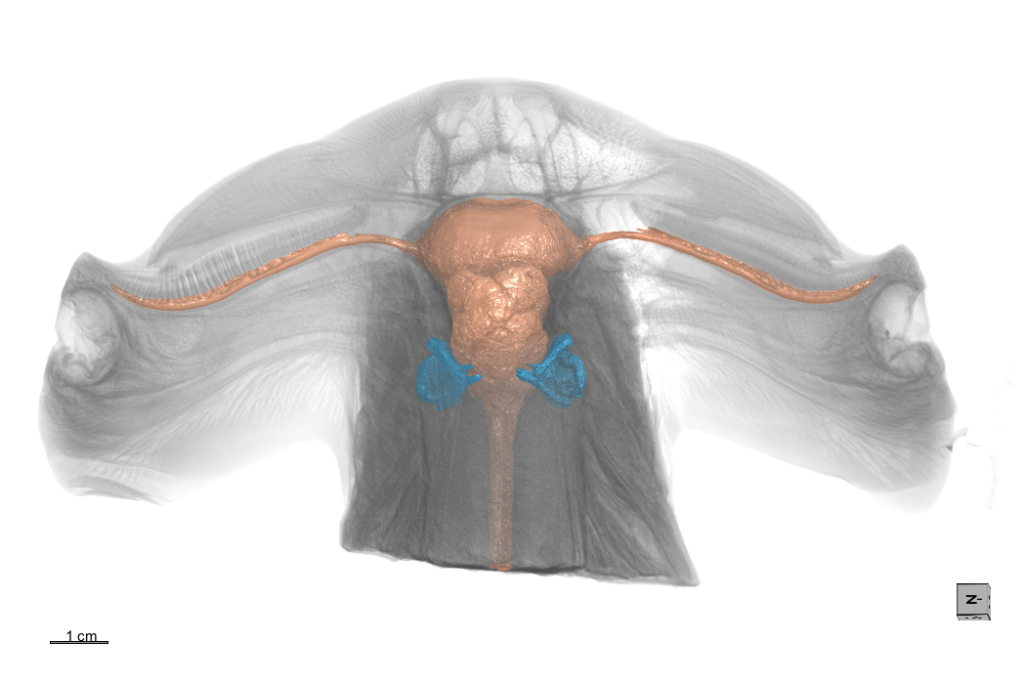
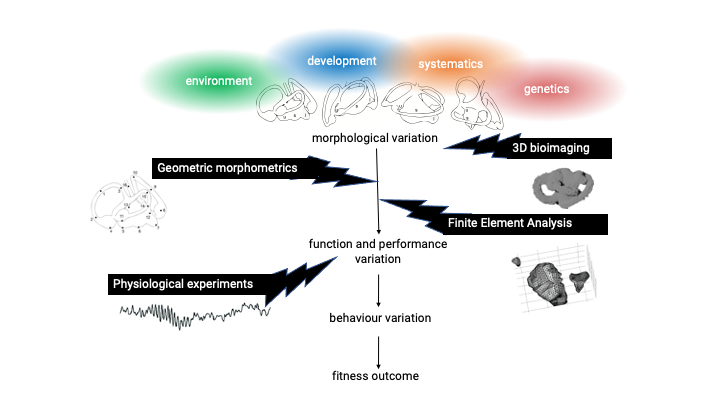
One of the predominant riddles of sensory biology is the diversity in fish auditory systems. It is widely accepted that fishes are well adapted to utilising underwater sounds as sensory cues in key life-history events. However, the functional significance and the driving force leading to the differences in fish inner ear sizes and structures are unknown. A complex interplay of physical, evolutionary, functional and ecological factors may shape the different elements: a multiscale environment too complicated for human conceptualisation. I propose to address this question by applying novel bioimaging and computational tools to investigate elasmobranch fish ears.
Aims
Generate high-resolution 3D models of elasmobranch hearing structures
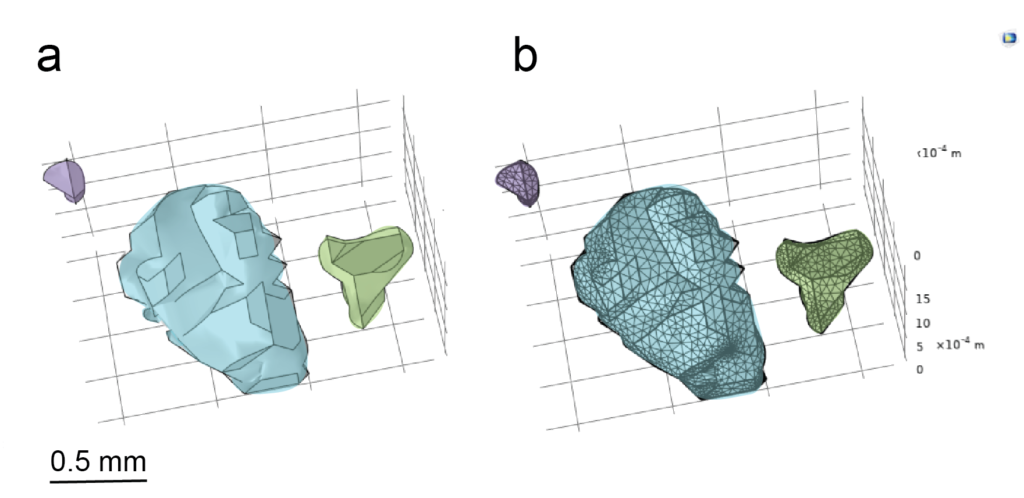
Develop the first Finite Element Model for elasmobranch hearing
Use AI to unravel the important factors that may shape the hearing system of elasmobranch fishes
While this research is ongoing, you can find some of the early outputs in Publications and News.
This research has received funding from the European Union’s Horizon 2020 research and innovation programme under the Marie Sklodowska-Curie grant agreement No 897218.